
The Role of Jeepneys in Philippine Cultural Identity
MORE LIKE THIS

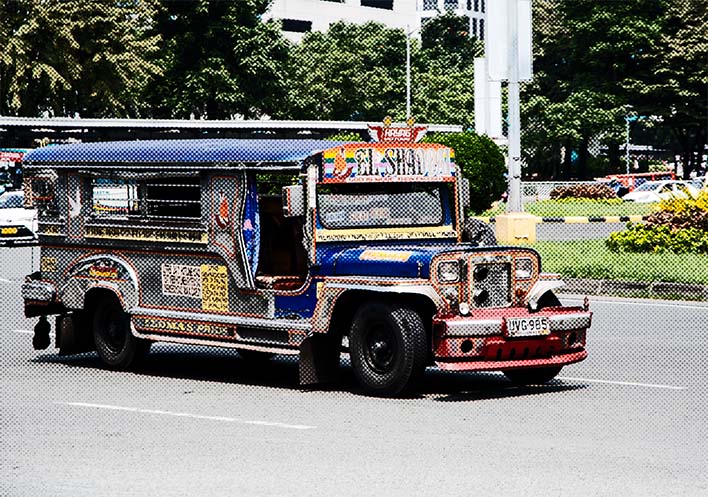
The jeepney is a recognized and adored icon of the Philippines, and Harvard College junior student Laurinne Eugenio adds that it is representative of Filipino ingenuity and resilience. This convenient mode of urban travel was born of leftover surplus American military jeeps post-World War II, and have since become a cornerstone of public transportation in the country. However, the controversial 2017 Public Utility Vehicle Modernization Program (PUVMP) aims to replace traditional jeepneys with more modern and environmentally friendly vehicles, a goal that has sparked debates about cultural preservation, economic viability, and environmental sustainability.
Eugenio’s family has strong ties to jeepney manufacturing. Her father’s company LJE Motors, built a sense of community among family members, engineers, designers, and drivers. Although Eugenio’s family immigrated to the U.S. in 2015, they remain involved with jeepneys. She remembers riding jeepneys and being enamored by the art decorating the vehicles, which often featured family portraits and creative lettering. It is clear that the jeepney’s cultural significance extends beyond transportation.
Eugenio’s research delves into the historical and cultural importance of jeepneys, how it became a national icon, and what consequences a potential phase-out entails for the Filipino people. It explores the challenges stakeholders face against modernization efforts, and argues that the jeepney’s legacy as a Filipino symbol of resilience was brought by the need to be resourceful in a post-war period. Her study addresses the conflicting sentiments between modernization and cultural heritage preservation, and advocates for a balanced approach that carefully considers environmental, cultural, and economic factors.
In Eugenio’s research this winter, she visited Sarao Motors, an esteemed Filipino automotive manufacturer headquartered in Las Piñas, Philippines. The company was founded in 1953 by Leonardo Sarao, a former kalesa driver turned mechanic with a starting budget of ₱700 (worth ₱91,211 in the year 2021). Sarao Motors would go on to become a multi million-peso enterprise and one of the most important jeepney manufacturers in the nation.
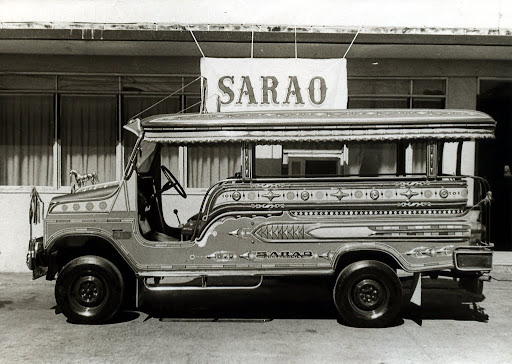
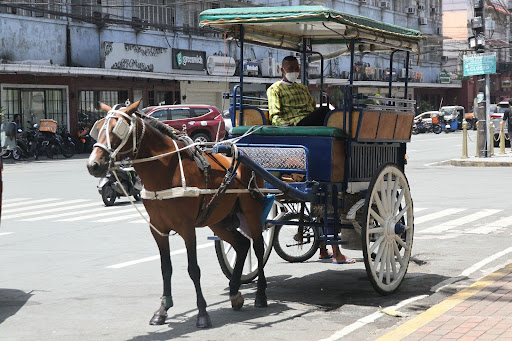
Eugenio met Ar. Leonard John Sarao, Operations Supervisor of Sarao Motors Inc., whom she previously had interviewed for Social Studies 50. He gave Eugenio a tour of the manufacturing plant, the highlight being one of the earliest jeepneys the company produced, decorated with hand-painted designs by local artists in Las Piñas. Sarao says that this jeepney is often showcased in cultural events to celebrate Filipino pride and craftsmanship. The plant housed a multitude of jeepneys, from vintage models produced in the company’s early years, to modern prototypes that follow government regulations. Sarao introduced Eugenio to one of their newest models, which featured a larger body to accommodate more passengers, enclosed windows to enable air conditioning, and a rechargeable electric engine. After Eugenio was shown the manual manufacturing process of the jeepney, she got to see a preserved kalesa, a reminder of the company’s humble origins and its founder’s past as a kalesa driver.
Eugenio plans to revisit the Philippines in the summer to further her research by conducting interviews with key stakeholders, such as jeepney drivers, workers at Sarao Motors Inc., and local Filipino activists pushing against the traditional jeepney phase-out. Her research efforts highlight her commitment to exploring the complex interaction between the prospect of modernization, cultural preservation, and economic progress in the Philippines.
This article was adapted from a research report by Laurinne Eugenio for the Harvard University Asia Center.
Asia Center Winter Research Grant : Laurinne Eugenio ’26 Studies the Role of Jeepneys in Philippine Cultural Identity. (2025, February 18). Harvard University Asia Center. https://asiacenter.harvard.edu/announcements/asia-center-winter-research-grant-laurinne-eugenio-26-studies-role-jeepneys