
Maximalism and Filipino Community Spaces
MORE LIKE THIS
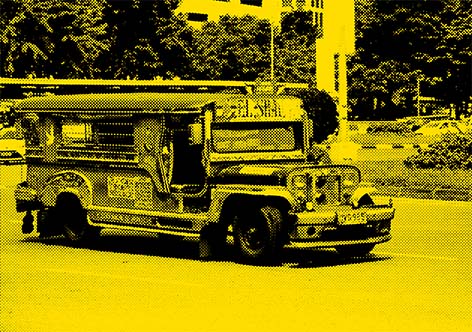
What constitutes Filipino culture is a rather complex conversation, as the Filipino people have become multifaceted due to their regional diversity and long history of external influence, and this is highlighted in their architecture and community spaces. Dr. HR Fernandez (1995) explains: “As a consequence of the strategic location of the Philippines, and the resulting exposure of the people to a wealth of goods and ideas, the Filipinos have enriched the fabric of their culture with fibers that are both of local and foreign origin. The natives have mastered the ability to adopt and adapt, in other words, use fibers of foreign origin so that, through the years, such fibers no longer remain foreign but have become part of the local fibers that are interwoven with new fibers introduced from foreign lands. Such is the fabric of Filipino culture and that is how architecture in the Philippines is to be viewed.”
One of the defining characteristics of the Filipino is their adherence to family values. A typical household is loud, colorful, and deeply interconnected, extending beyond the nuclear family by including other relatives and even close friends of the family. Family connection is one reason that Filipinos feel especially attached to their homes, and why multiple generations live in the same house. Another family-oriented characteristic that Filipinos have is staying with their parents as they get older. It is common for working adults to stay with their parents to save money, and for elderly parents to stay with their adult children so they can be easily taken care of. The desire to be around their family and friends greatly shapes Filipino societal values.
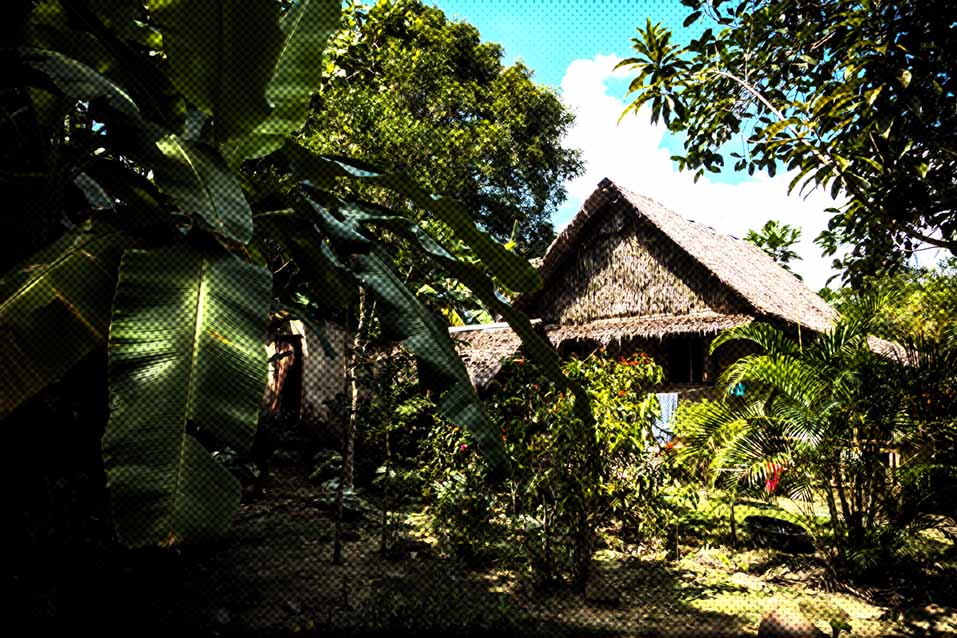
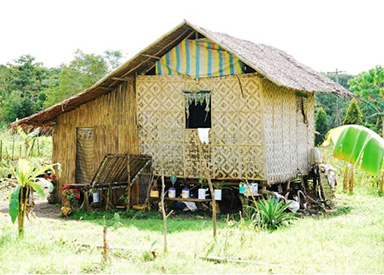
The traditional home that embodies these characteristics is the bahay kubo, a semi-permanent bungalow constructed by nearby materials in tropical areas, such as bamboo and nipa leaves. These materials allow for natural ventilation of the interiors, but leaves the structure vulnerable to damage during the rainy season. Nonetheless, the damage is easily repaired once it is sunny again, highlighting how resilient and resourceful the Filipino people are. The inside of the bahay kubo caters to the family, rather than the individual. There are no partitions or personal rooms, the interior is one large open area meant for dining throughout the day, and there is a sala (living room) for leisure, visiting guests, and for the family to sleep together at night. Privacy is often valued in other cultures, especially Western societies, but in the Filipino context, proximity is the norm, as it often means security and connection.
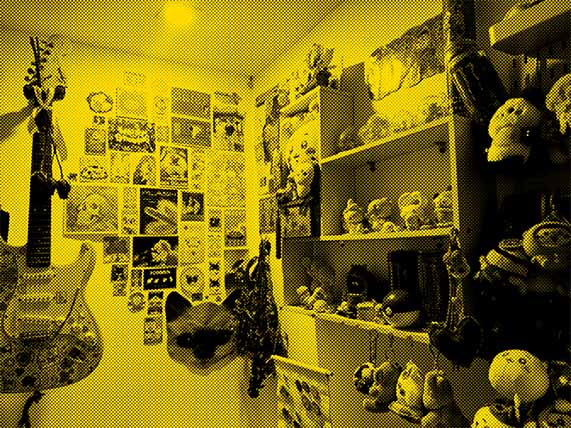
When it comes to the field of art and design, Filipinos certainly have a tendency to fill spaces. This can be attributed to the concept of horror vacui, known as the “fear of the void” or the artistic style of filling empty spaces with details. Filipino anthropologist Felipe M. De Leon Jr. appropriately identifies this as an example of maximalism. In modern Filipino homes, this is demonstrated by walls covered with paintings, photographs displayed in frames, antique items, and various other memorabilia. Every single space in every room must be occupied by something befitting of a home.
The concept of horror vacui is not exclusive to Filipino homes specifically, but rather based on the larger economic sentiment that having more is inherently better. The country’s history ingrained the idea that having too much empty space meant poverty, and that abundance and extravagant decoration indicated wealth and luxury. When we consider the elders’ past, World War II devastated their communities and took away so much of what they had. It becomes understandable why they feel the need to acquire more than what is necessary as a contingency.
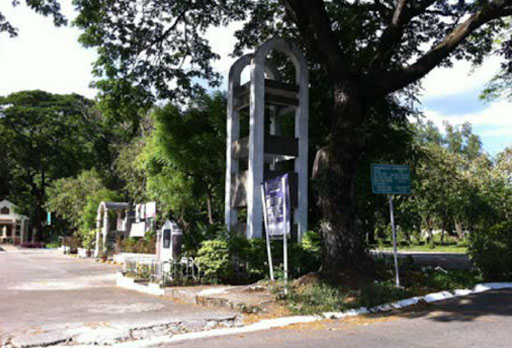
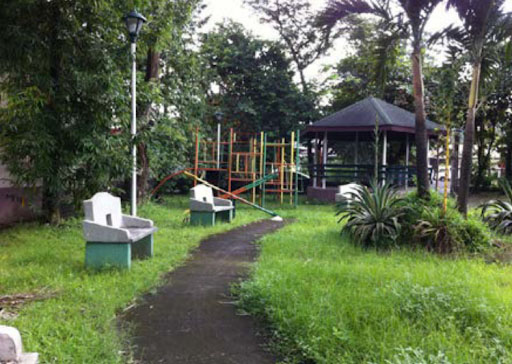
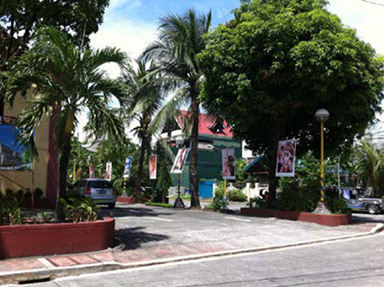
The Filipino need to fill up spaces, apparent in their homes, is extended to public spaces and communities. Open spaces in a given subdivision are often inclusive of several types of vegetation and various hardscapes. There are multiple sports courts, playgrounds, and plant boxes, of which were given by several past subdivision administrations. Entertainment areas, garages, and gardens are extended, as tenants place tables, benches, and even gazebos on vacant lots across their homes. These vacant lots might also be used for parking or for other residents to cultivate crops.
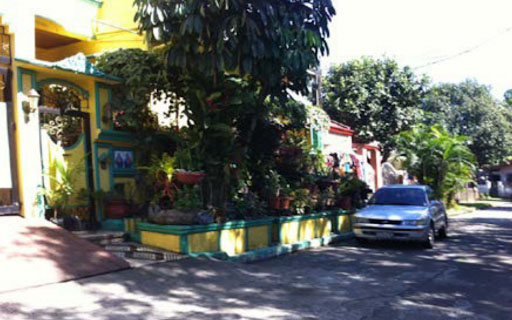
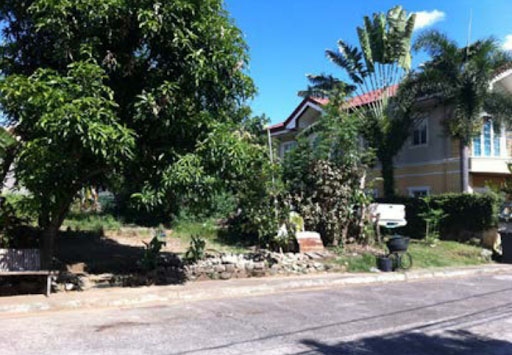
For better or worse, Filipinos value every inch of available space, even in situations where they don’t own the space. Nonetheless, these spaces reflect the multiple functions of the bahay kubo, and the inclination to crowding due to hundreds of years of foreign colonization. Another appropriate reason for these spatial extensions is the desire to display social power, as in, homeowners showing off their newest acquisition to their neighbors, whether it’s a piece of outdoor furniture or an additional car one can’t fit in their garage. This may be done with the intention of exerting individuality, while also fostering connection with surrounding people.
The need to assign multiple functions to a given space, and to modify and extend beyond it, speaks to a profoundly Filipino quality. It’s reflective of the bahay kubo; Filipinos possess a need to fill empty spaces with, and for those spaces to have worth, whether for personal satisfaction or practical use. Otherwise, sayang (what a waste!) Filipinos have a noteworthy affinity towards maximizing space, a trait influenced by their colonial history, societal sovereignty, and cultural values. If one were to develop a community for Filipinos, they should consider their subconscious need to fill space, address the desire to expand, and essentially accommodate for the Filipino’s distinct sense of place.
Original article can be found at:
Lorenzo, C. M. (2015). Filipino Culture of Filling Up Space in a Gated Community. Procedia – Social and Behavioral Sciences, Volume 216, 541-551.
https://www.sciencedirect.com/science/article/pii/S1877042815061972